

Zamak Microinjection: Ultra-precise parts, produced at high throughput. Zamak 3 (ZA4G),Zamak 5 (ZA4U1G)
Very High Production Capacity
Low-energy
Energy-efficient machines
Coins ranging from
1 to 40 grams
1. What is Zamakmicro-injection
?
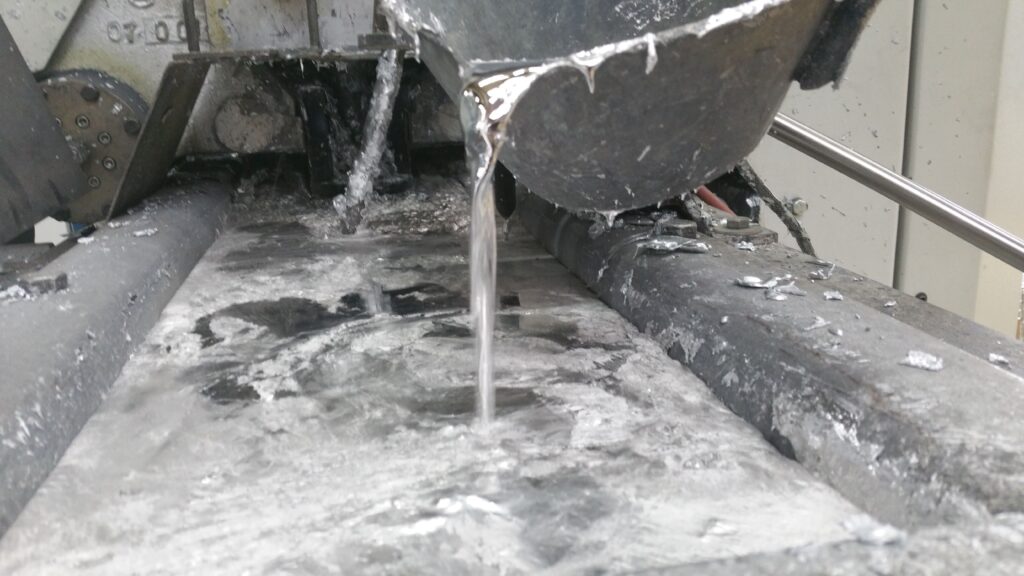
Zamak micro-injection is a hot-chamber die-casting technique that uses multi-slide molds—with up to four perpendicular slides—which allow for the production of complex shapes that cannot be achieved through conventional die-casting.
Molten metal is injected at high pressure into a closed mold. Solidification occurs almost instantly, allowing production rates of 5 to 15 cycles per minute while ensuring perfect reproducibility for each part.
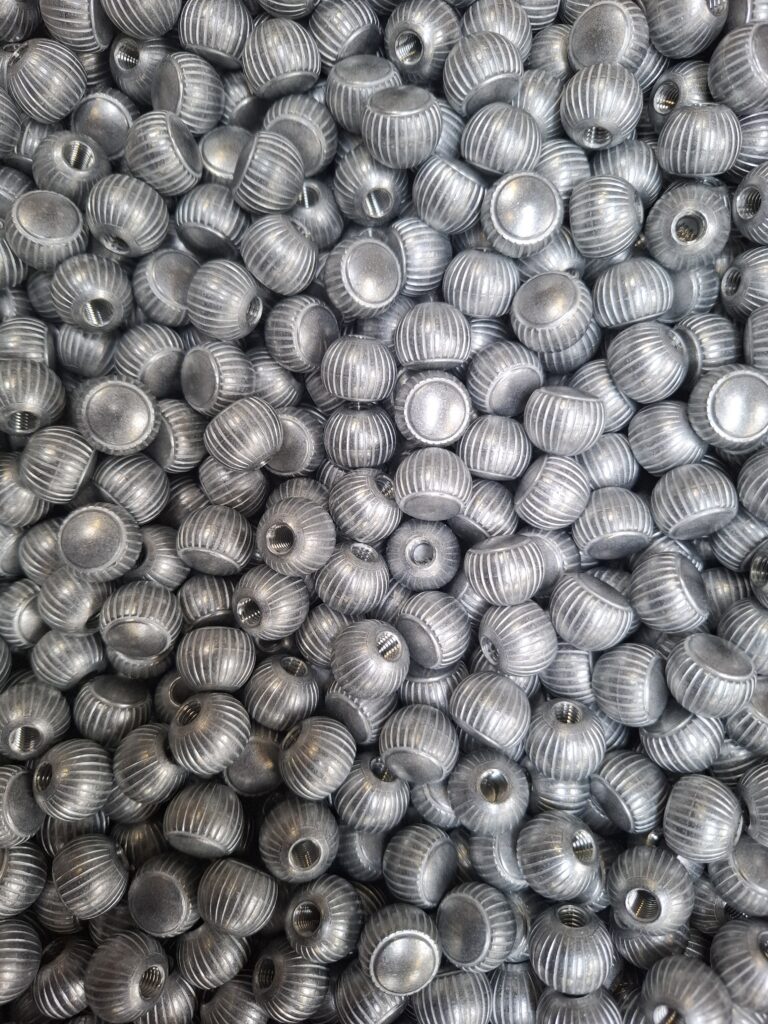
This process is particularly well-suited for manufacturing micro-parts weighing 0.10 g to 40 g with complex internal or external geometries, undercuts, through-holes, or threads—without the need for routine secondary operations.
Unlike traditional two-cavity molding, the multi-slide system offers considerable design flexibility and significantly reduces the production cost of mass-produced parts.

The Benefits
- Complex Shapes & Tight Tolerances
The multi-slide system enables ultra-fine geometries and details that are impossible to achieve with conventional casting; chip-free castings, reduced porosity, and improved surface finish. - High production rate
Average cycle times of 5 to 15 CPM. Automation enables very high production rates, ideal for meeting the deadlines of very large-scale production runs. - Reduced production costs
Zamak micro-injection significantly reduces the unit cost even for medium-volume runs, and tooling costs decrease over time thanks to the long service life of the molds. - Perfect reproducibility
Each part remains identical cycle after cycle, ensuring strict dimensional tolerances with no drift. - Low energy consumption
. More energy-efficient than conventional presses, these machines significantly reduce costs and environmental impact.
Net-Shape Castings: The precision of the process eliminates costly secondary machining operations, resulting in parts that are ready for immediate use, and allows for the consolidation of multiple components into a single part.
2. Key Features
- Average cycle rate: 5 to 15 cycles per minute
- Number of tracks: Up to 4 perpendicular tracks
- Locking force: Up to 5 metric tons (hydraulic actuators)
- Weight range: 0.10 g to 40 g
- Injection Systems: Rapid Pneumatic
- Adapters: Flexible crosshead
3. Zamak 3 or Zamak 5: Which one should you choose?
| Properties | Zamak 3 (ZA4G) | Zamak 5 (ZA4U1G) |
|---|---|---|
| Density | 6.6 g/cm³ | 6.7 g/cm³ |
| Molding temperature | 400–425 °C | 400–425 °C |
| Tensile Strength | 26–30 daN/mm² | 30–34 daN/mm² |
| Yield strength | 25–29 daN/mm² | 29–33 daN/mm² |
| Elongation | 3–6% | 2–5% |
| Compressive Strength | 41 daN/mm² | 60 daN/mm² |
| Fatigue Strength | 4.7 daN/mm² | 5.6 daN/mm² |
| Brinell Hardness | 80–90 HB | 85–95 HB |
| Cu Content | < 0.03% | 0.7–1.1% |
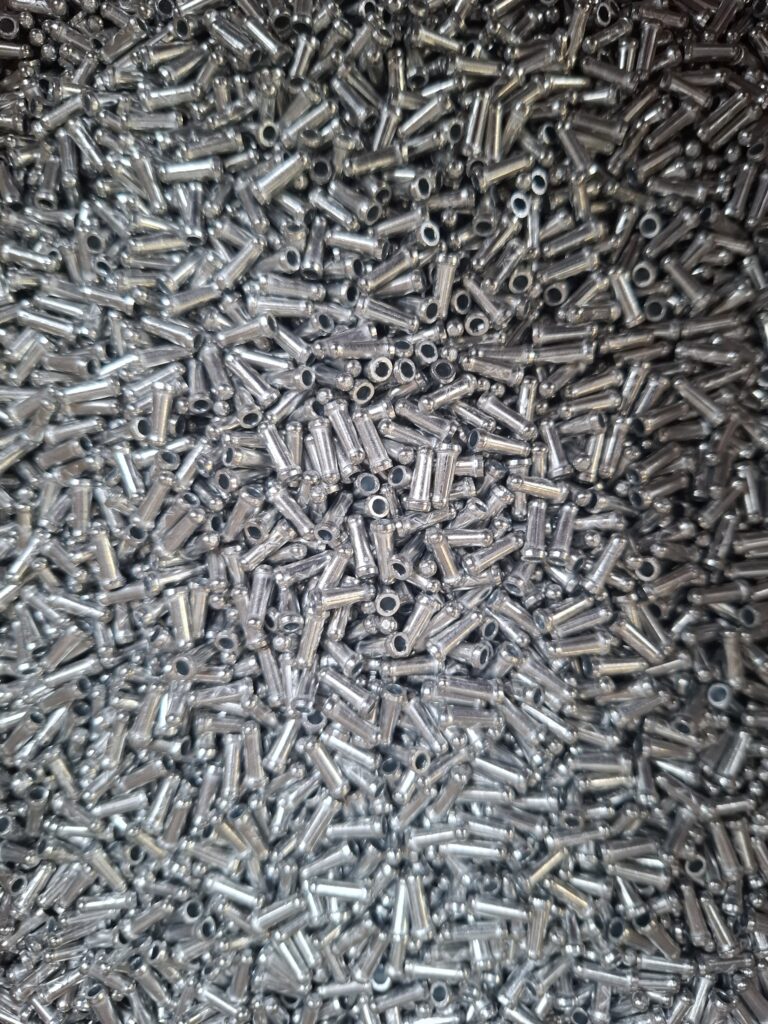
Who uses our zamak micro-parts?
Zamak microinjection meets the requirements of many industrial sectors that demand precision, high volume, and competitiveness.
52%
Electric
& Electronics
22%
Consumer Goods
14%
Cosmetics
12%
Other sectors

French Expertise from a Specialist
Zamak micro-injection is a niche process that requires comprehensive expertise in machinery, tooling, and metallurgy. Drawing on its long-standing expertise, the ID Casting Group carries out this high-precision production at its dedicated facility in Dampierre-les-Bois.
A unique level of proximity that ensures collaborative design support, full traceability, and the delivery of high-precision finished parts.