

Zamak or aluminum: Which alloy should you choose for your industrial parts?
Abstract:
Zamak or aluminum: this question comes up on the desk of every buyer and design engineer as soon as a new technical part project is launched. These two alloys dominate industrial die casting, but their characteristics—and therefore the contexts in which they excel—are quite distinct. Before finalizing specifications or approving tooling, here is a fact-based comparison to guide your decision.
What is zamak? A brief overview of this zinc alloy
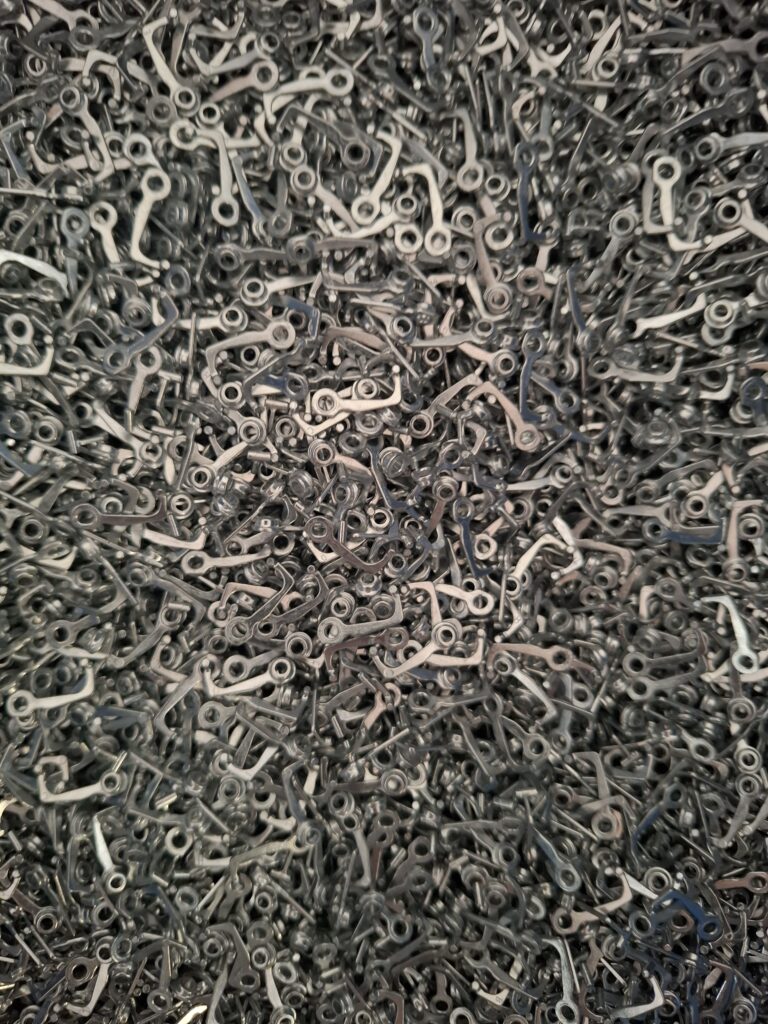
Zamak is a zinc-based alloy to which aluminum (3.5 to 4.3%), magnesium, and copper are added, depending on the grade (Zamak 2, 3, 5, 7, etc.). Its name is a German acronym: Zink, Aluminium, Magnesiumgnesium, Kupfer (copper).
Its key features:
- Low melting point : approximately 380–420 °C depending on the grade, compared to 660 °C for pure aluminum
- High density : 6.6 g/cm³ (2.5 times that of aluminum)
- High flowability during injection, allowing for complex geometries and very thin walls
- 100% recyclable, without any loss of mechanical properties
It is an alloy of choice for hot-chamber die casting, a process that ID Casting has been mastering for over sixty years at its sites in France and Tunisia.
What is aluminum in die casting?
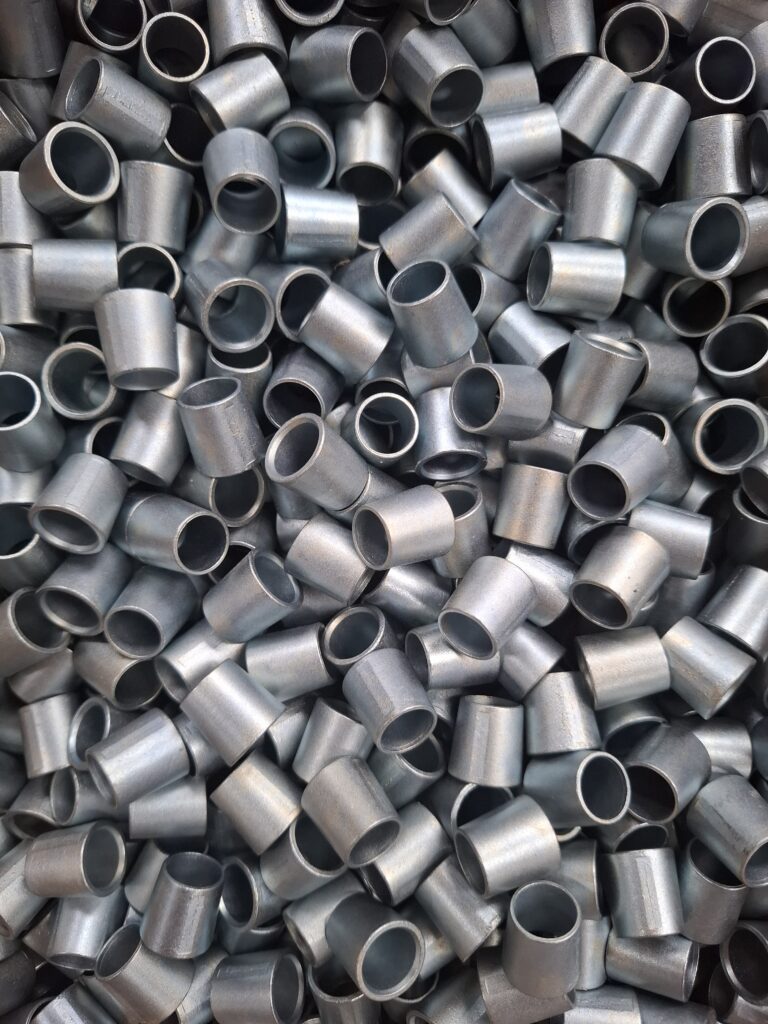
Aluminum (and its alloys—AS9U3, ADC12, A380, etc.) is the most widely used metal in foundries worldwide. Lightweight, corrosion-resistant, and an excellent thermal conductor, it is naturally well-suited for numerous industrial applications.
Its key features:
- Low density : 2.7 g/cm³
- Melting point : 660 °C, which requires a cold-chamber process
- Good mechanical strength at high temperatures
- Thermal conductivity high
Zamak vs. Aluminum Comparison: 8 Key Criteria
1. Dimensional accuracy and complexity of shapes
Zamak has the edge in this regard. Its flowability during injection molding is superior to that of aluminum, which makes it possible to produce more complex geometries, thinner walls (up to 0.5 mm) and fine details which are difficult to reproduce using an aluminum alloy. Dimensional repeatability is also better, a decisive advantage in high-volume production.
👉 Advantages of zamak for high-precision technical parts or those with complex shapes.
2. Part weight
Aluminum is about 2.5 times lighter than zamak. Where weight is a critical factor—automotive parts, aerospace components, portable devices—aluminum is the natural choice.
👉 Advantages of aluminum whenever weight reduction is a functional requirement.
3. Mechanical Strength and Wear Resistance
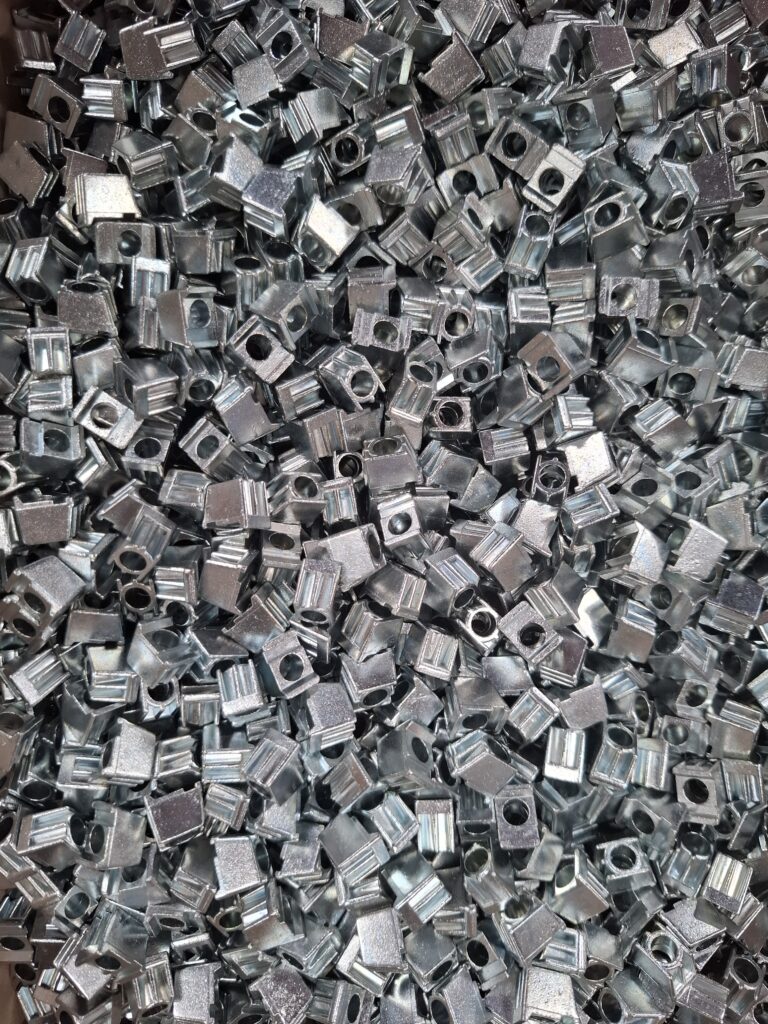
Under moderate mechanical stress (friction, impact, tension), zamak exhibits superior wear resistance and better resistance to abrasion. Aluminum, on the other hand, is more resistant to mechanical stress at high temperatures (above 100–120 °C, the properties of zamak deteriorate).
👉 Zamak advantage at ambient conditions. Advantages of aluminum in hot environments or under high structural stress.
4. Service Life of Tooling
This is one of the most critical factors in determining a series’ profitability. A zamak mold can withstand, on average, 10 times as many injections than an aluminum mold, thanks to the much lower injection temperature (380 °C versus 650 °C). At ID Casting, zamak molds commonly reach more than one million injections.
👉 Zamak Advantage significant advantage in terms of total cost of ownership (TCO) for high-volume production.
5. Production Cost and Production Rate
Zamak’s low melting point results in a 25% reduction in energy consumption compared to aluminum. Production rates in hot-chamber die-casting are also higher. For large production runs, the cost difference can be significant.
Conversely, since the material cost of zinc per kilogram is higher than that of aluminum, the economic advantage of zamak is primarily reflected in the total cost per part (energy + tooling + scrap + finishing), not just the price of the metal itself.
👉 Zamak Advantage in terms of unit cost for high-volume production. Case-by-case analysis for small production runs.
6. Surface Treatments and Finishing
Zamak can be finished in a wide variety of ways: chrome plating, nickel plating, painting, powder coating, simulated anodizing, passivation, and more. Its smooth surface after injection molding minimizes the need for secondary processing. Aluminum is also compatible with many treatments, but surface preparation is often more demanding.
👉 Advantages of Zamak for parts where aesthetics are critical or that require specific corrosion protection.
7. Waterproofing
Zamak offers naturally superior seal Injection molding: Microporosity is virtually nonexistent in hot-chamber die casting. This is a key advantage for valve parts, valve bodies, gas components, and electronic enclosures.
👉 Zamak Advantage for any application requiring a guaranteed seal.
8. Recyclability and Environmental Impact
Both alloys are recyclable. However, zamak has a more favorable environmental footprint over its entire life cycle: lower injection temperature = less energy consumed, scrap reused in a closed-loop system, no specific processing waste. ID Casting implements an integrated recycling system at all its sites: offcuts and scrap are re-melted to produce new parts.
👉 Zamak Advantage on the energy footprint of the production process.
In which industries is zamak used?
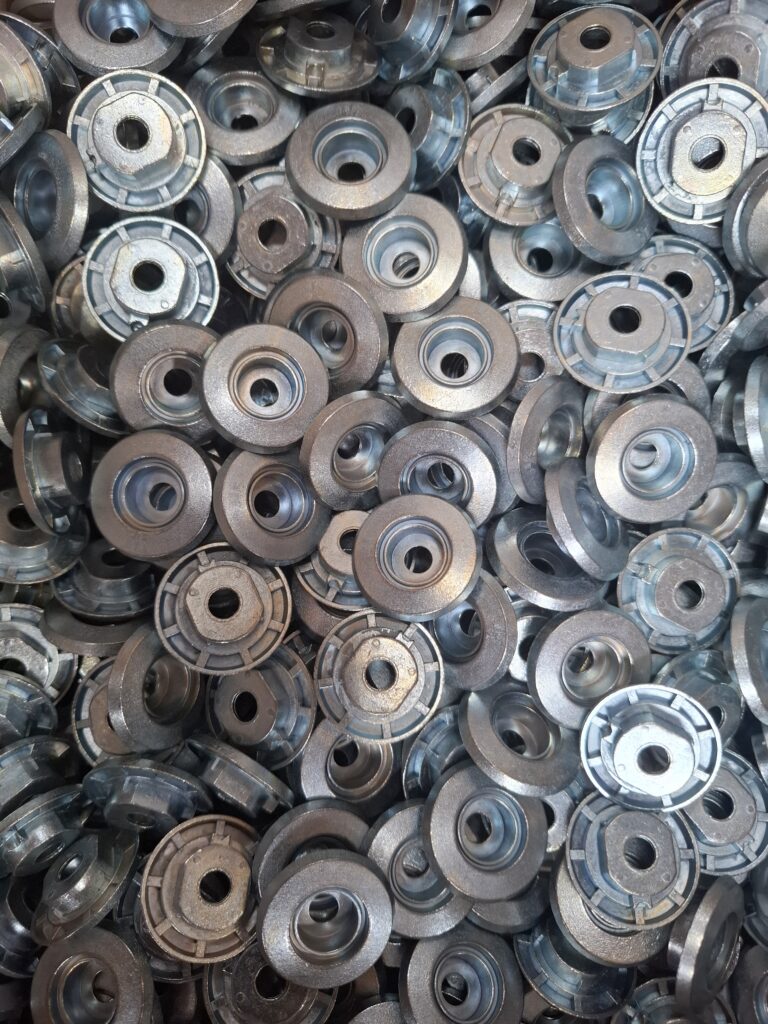
Zamak has a wide range of industrial applications. ID Casting’s customers use it, in particular, for:
- Automotive : locks, handles, mounting clips, connector components
- Building and Gas : valve bodies, fittings, valves, technical hardware
- Electrical / Electronic : protective enclosures, remote control rings, circuit breaker parts
- Medical : components requiring a perfect seal and high precision
- Sports and Recreation : assembly parts that are both lightweight and durable
Where the constraints are the precision, the geometric complexity, large-scale production and the tool life, zamak is very often the most cost-effective choice.
When should you choose aluminum?
Aluminum remains the material of choice when:
- Lightweight Lightweight design is a non-negotiable functional requirement (premium automobiles, aerospace, portable devices)
- The part is subjected to temperatures above 120 °C during operation
- High high structural mechanical stresses apply (tensile strength, bending under load)
- The production volume is low and amortizing the tooling costs is a challenge
How do you choose between zamak and aluminum for your project?
The final choice depends on a combination of several factors: the room’s function, its operating environment, production volume, weight constraints, and finish requirements. There is no one-size-fits-all answer—but there is a methodology.
At ID Casting, every project undergoes a technical and economic analysis through co-design in collaboration with the customer’s engineering department. The goal: to identify, as early as the design phase, the alloy and manufacturing process that will optimize both the part’s performance and the production cost over the product’s service life.
Key Takeaways
- The Zamak excels in terms of precision, leak resistance, mold life, and energy costs.
- Thealuminum is the material of choice when light weight or high-temperature resistance is a priority.
- The best choice always depends on the part, its intended use, and the production volume.
- Co-design support from the very beginning of the design process helps prevent costly material errors.
Do you have a project involving a technical die-cast part? Contact the ID Casting team for a feasibility analysis and a quote tailored to your production volumes.